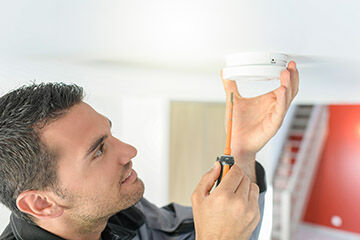
Fire Safety Update - Interconnected smoke alarm requirements
Date: 21 May 2026
Fire risk in residential properties is changing. As technology evolves and older building materials remain in use across New Zealand housing stock, landlords must stay proactive. This month we look at three critical safety areas: interconnected smoke alarms, lithium battery fire risks, and asbestos exposure following a fire.
Interconnected smoke alarms - what has changed?
In November 2023, the New Zealand Building Code (C/AS1 and C/AS2) was amended to require interconnected smoke alarms in new homes and substantial renovations. After a 12-month transition period, this became mandatory from November 2024.
This does not mean every existing rental must now be upgraded. The requirement applies to new builds and major renovations that require building consent.
For applicable properties, smoke alarms must:
Interconnection significantly improves early warning. If a fire starts in one room, alarms activate throughout the dwelling, giving occupants critical additional time to escape.
Lithium batteries in properties - A growing fire risk for landlords
As lithium powered devices become part of everyday life, the fire risk within residential properties is evolving. From mobile phones and laptops to power tools, e-bikes and electric scooters, lithium-ion batteries are now commonly present in most homes across New Zealand.
While these technologies offer convenience, they also introduce a heightened risk of fast moving and highly toxic fires. Why lithium battery fires are different Lithium-ion batteries can ignite if damaged, overcharged, exposed to heat, or used with incorrect chargers. When they fail, they can enter “thermal runaway”, a rapid chain reaction causing intense heat, fire and even explosions.
Unlike traditional house fires, lithium battery fires:
The toxicity of the smoke, often more than the flames themselves, poses serious danger to occupants.
The importance of working smoke alarms
In the event of a lithium battery fire, every second counts. Because these fires spread rapidly and produce highly toxic smoke, smoke alarms provide vital early warning, giving tenants precious time to escape.
Landlords in New Zealand are already required under the Residential Tenancies (Smoke Alarms and Insulation) Regulations 2016 to ensure:
- Smoke alarms are installed in the correct locations
- Alarms are working at the start of each new tenancy
- Batteries are functional and the required number of alarms are compliant.
With the growing presence of lithium powered devices, ensuring smoke alarms are reliable and maintained is more important than ever.
What landlords and property managers can do
While landlords cannot control every device brought into a property, risk can be reduced by:
- Ensuring smoke alarm compliance at every inspection
- Reporting any smoke alarm concerns to your smoke alarm provider immediately
- Encouraging tenants to use manufacturer approved chargers
- Advising against charging e-scooters or batteries in escape pathways
- Reminding tenants not to charge devices unattended or overnight.
Many older New Zealand homes still contain asbestos in materials such as fibro sheeting, insulation and ceiling tiles. Asbestos is a serious health hazard. When asbestos containing materials are damaged, broken, or burnt, fibres can be released into the air. If inhaled, these fibres significantly increase the risk of diseases such as asbestosis and mesothelioma.
In the event of a fire in a property with known or suspected asbestos:
- Everyone must evacuate immediately
- No belongings should be retrieved
- No one should re-enter the property until it has been declared safe by qualified professionals.
Fire damage can release asbestos fibres, even if materials were previously intact. Re-entry before professional assessment creates serious health risk.
If a fire occurs in a property with suspected asbestos, specialist advice should be sought before re-entry, clean-up or reoccupation.
Protecting life and investment
Lithium batteries are here to stay. Many New Zealand homes still contain asbestos. Building Code requirements continue to evolve.
One constant remains: early warning saves lives.
Ensuring compliant, operational smoke alarms are installed and properly maintained is one of the most effective ways landlords can protect both their tenants and their investment.